
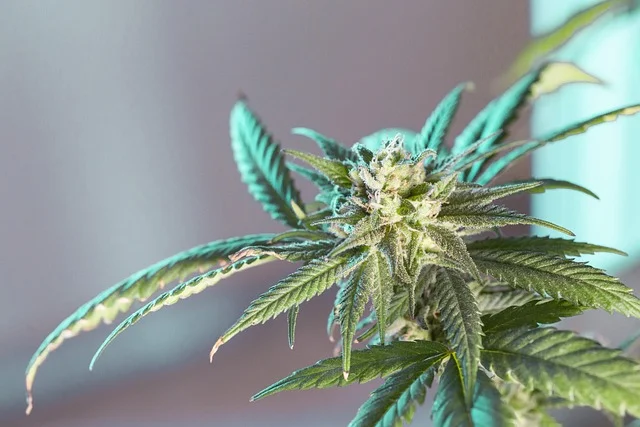
Archaeologists have uncovered evidence that ancient Scythian communities in southern Siberia used cannabis for its psychoactive effects nearly 3,000 years ago. The discovery includes more than 1,400 cannabis seeds and chemical traces associated with THC found in human hair preserved inside an ancient burial mound.
Cannabis use is far from a modern phenomenon. A remarkable archaeological discovery in southern Siberia has pushed back our understanding of the plant’s psychoactive history by almost three millennia.
An international team of researchers has identified chemical evidence of cannabis exposure in human remains recovered from an ancient Scythian burial site dating back approximately 2,800 years.
The findings, published in the scientific journal Science in November 2026, provide the oldest directly dated evidence currently known of cannabis being used for its intoxicating effects.
What makes this discovery particularly significant is that researchers did not simply find cannabis seeds buried alongside human remains. They also analysed preserved human hair and detected chemical compounds associated with cannabis, offering important evidence that the plant was consumed or otherwise used by people connected to the burial.
More Than 1,400 Cannabis Seeds Found in a 2,800-Year-Old Siberian Tomb
The discovery was made at a monumental burial mound in the Uyuk Valley, in the Republic of Tuva, southern Siberia, Russia.
The burial site is associated with the Scythian cultural world, a collection of nomadic peoples who inhabited the Eurasian steppes and were renowned for their horsemanship, military skills and elaborate metalwork.
The enormous burial mound, measuring approximately 140 metres in diameter, contained the remains of individuals belonging to the highest social ranks of their society.
Among the archaeological materials recovered were more than 1,400 cannabis seeds.
Researchers used radiocarbon dating to establish the age of several seeds, placing their deposition in the early eighth century BC, approximately 2,800 years ago.
Although cannabis seeds have previously been discovered at ancient burial sites across Eurasia, their presence alone does not necessarily demonstrate psychoactive use. Cannabis was also cultivated for its fibres, seeds and oil, which had numerous practical applications.
The most important evidence in this discovery, however, came from a different source.
Human Hair Analysis Reveals Chemical Traces Associated with THC
One of the most remarkable aspects of the investigation was the opportunity to analyse human hair preserved for nearly three millennia.
Scientists examined several hair samples recovered from the central burial chamber and identified chemical signals consistent with cannabinol (CBN), a compound associated with the oxidation of THC, the principal psychoactive component of cannabis.
They also detected weaker signals compatible with THC itself.
These findings are particularly significant because they help connect the cannabis remains found inside the burial mound with possible exposure to the plant’s psychoactive compounds.
According to the researchers, the hair analysis provides evidence supporting the use of cannabis for its intoxicating effects.
However, the results cannot establish exactly how much cannabis was consumed or how it was administered. Researchers cannot definitively determine whether the individuals inhaled cannabis smoke or were exposed to its compounds through another method.
Consequently, although the study strongly supports psychoactive cannabis use, it does not provide a definitive reconstruction of the consumption method.
Was Cannabis Used in Ancient Scythian Funeral Rituals?
The archaeological context provides further clues about the possible role of cannabis in ancient Scythian society.
The burial was not an ordinary grave. It was a monumental funerary structure associated with high-status individuals and elaborate ceremonial practices.
Archaeologists also documented the remains of numerous horse sacrifices around the burial mound, as well as scattered human bones that may be connected with possible human sacrifice.
Within this context, the presence of cannabis seeds and chemical evidence found in human hair raises the possibility that the plant played a role in ancient religious or funerary ceremonies.
One hypothesis is that cannabis was used to induce altered states of consciousness during rituals or to facilitate specific spiritual practices.
Nevertheless, researchers have not been able to establish precisely how the plant was used or who participated in its consumption.
What the evidence does suggest is that cannabis had a meaningful presence in this funerary context, extending beyond its everyday practical applications.
The Scythians and the Ancient History of Cannabis
The Scythians were nomadic peoples who occupied vast areas of the Eurasian steppes during the Iron Age. Their societies were closely connected to horses, long-distance movement and highly elaborate burial traditions.
Their relationship with cannabis was not entirely unknown before this discovery.
The ancient Greek historian Herodotus, who lived during the fifth century BC, described Scythian customs involving the use of cannabis smoke.
According to his account, participants in certain ceremonies entered small enclosed structures and placed cannabis seeds on heated stones, inhaling the resulting smoke.
For decades, these historical descriptions were difficult to verify through conclusive archaeological evidence.
However, discoveries from burial sites across Central Asia, combined with the new findings from Siberia, have provided additional support for at least some of Herodotus’s accounts.
The latest research adds another important piece to the historical puzzle: rather than relying exclusively on written accounts, seeds or objects associated with cannabis, scientists now have chemical evidence compatible with its psychoactive compounds in ancient human hair.
Is This the Oldest Evidence of Cannabis Use in History?
The Tuva discovery has been presented by its researchers as the oldest directly dated evidence currently known of cannabis use for its psychoactive effects.
Nevertheless, other archaeological discoveries have already demonstrated that cannabis had a long history of use across different parts of Asia.
In 2019, a study published in Science Advances identified chemical residues of cannabis in wooden braziers recovered from the Jirzankal Cemetery, located in the Pamir Mountains in present-day China.
These funerary objects were approximately 2,500 years old. Chemical analysis detected cannabis-related compounds in the combustion residues, suggesting that the plant was burned during certain burial ceremonies.
Cannabis seeds and containers containing heated stones had also been documented in burials associated with the Pazyryk culture in the Altai Mountains.
The key difference with the new Siberian discovery is the combination of two forms of evidence: directly dated plant remains and molecular traces associated with cannabis in human hair.
Together, these findings provide stronger evidence that cannabis was being used for its psychoactive properties approximately 2,800 years ago.
A Discovery That Could Change the History of Cannabis
The research opens new possibilities for understanding how cannabis spread across Eurasia and when different populations began deliberately using the plant for its psychoactive properties.
Until now, archaeologists have faced considerable challenges reconstructing these practices because cannabis leaves, flowers and resins deteriorate relatively quickly over time.
The exceptional preservation of seeds and human hair at the Siberian burial site has helped overcome some of these difficulties.
Researchers are also investigating DNA preserved in some of the seeds. This could provide further information about ancient cannabis varieties, their evolution and the historical processes through which the plant was domesticated and spread.
For now, it remains unclear whether these ancient plants had been selected for higher THC concentrations or originated from wild populations.
What is becoming increasingly clear, however, is that human knowledge and use of cannabis have much deeper roots than its more recent history might suggest.
Approximately 2,800 years ago, in the grasslands of southern Siberia, cannabis was already part of a cultural world in which funerary rituals, spiritual beliefs and substances capable of altering human consciousness were closely connected.
A discovery that reminds us that the history of cannabis is far older, more complex and more fascinating than many people might imagine.


